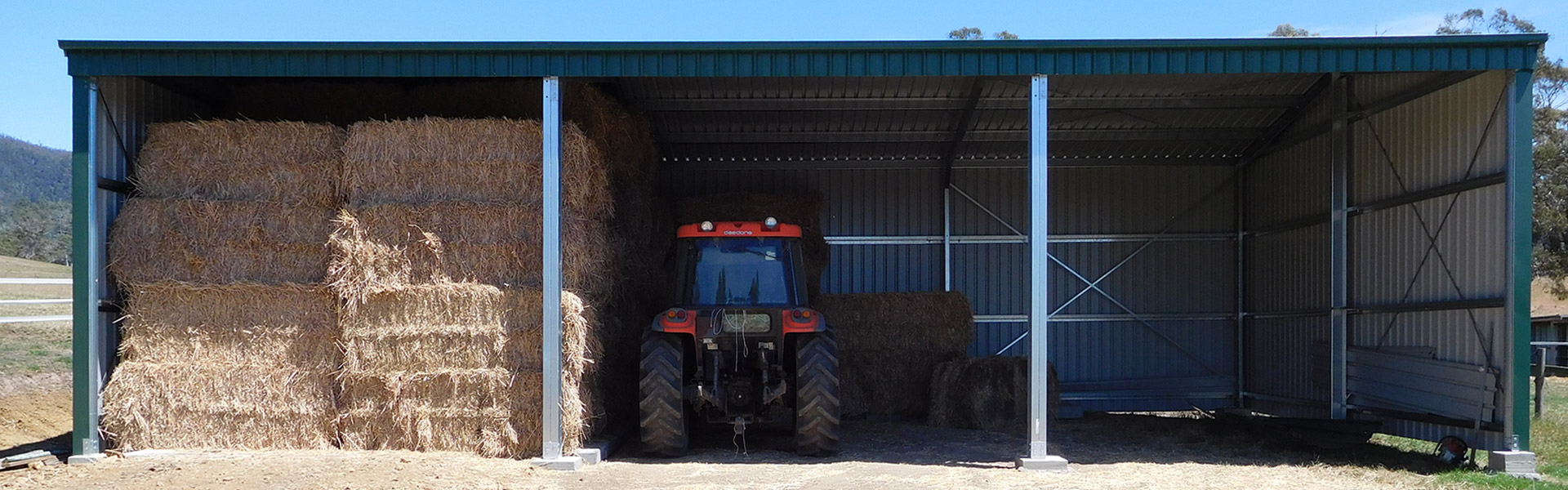
Farm Sheds For Sale Tasmania.
Hay, machinery and livestock sheds, custom designed for your paddock and engineered for Tasmanian wind, snow and sun.
Looking for a farm shed for your Tasmanian property?
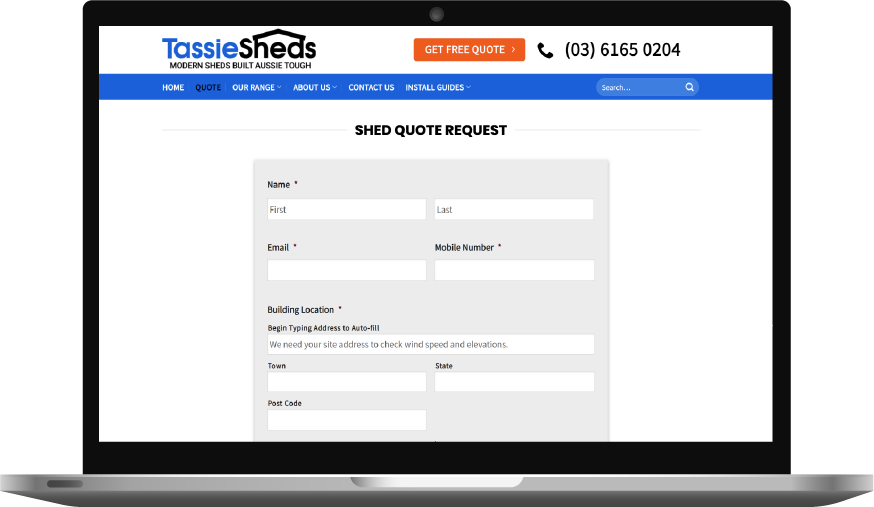
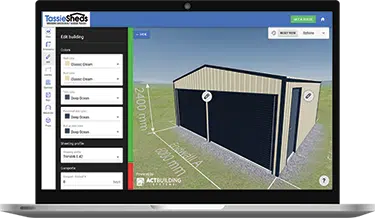
If you are pricing a farm shed, the fastest starting point costs nothing: draw your shed in our 3D shed designer, set the span, length and height, add your options and send it to us to price, or request a written quote and we will email you a costing built around your paddock, your machinery and your site conditions. Every Tassie Sheds farm shed is engineered to order from 100% Australian BlueScope steel, is ShedSafe accredited, and is designed for the specific wind, snow and solar loading at your property. We have designed rural sheds across Tasmania since 2014 from our head office in Moonah, Hobart, and deliver buildings statewide from plants in both Hobart and Launceston.
What will a farm shed cost, and how do you get a number?
Farm sheds vary too much to carry a fixed price list. A good value shed is not always about price. An open-front hay shed, a lock-up machinery shed and a fully enclosed workshop of the same footprint are three very different buildings once you account for doors, bracing, wind rating and whether it is a supply-only kit or a fully installed build. Rather than a vague "from" price, the 3D designer lets you configure the exact building you need and send it to us to price, and a written quote lets our team factor in access, site slope and ground conditions. Both are free and carry no obligation.
How to choose the right farm shed size
The three dimensions that form the basic layout of a farm shed are span (the clear width between columns), length (how far the shed runs, usually set out in bays), and height (clearance to the eave). The big advantage of a portal-frame farm shed is the clear span, no internal posts to steer a tractor or header around. A useful reference point in the designer is:
- TAS-1005 Farm Shed (18 × 12 × 4.2 m): around 216 m² of covered space with a generous clear span for machinery, and 4.2 m walls to clear a tractor cab, raised tipper or tall implements. It works as an open-front hay and machinery shed, or you can enclose bays for a workshop or secure storage.
From there, size to what you actually store. Measure your largest piece of gear (a tractor, backhoe or truck), including height with the cab up or the arm folded, and add clearance so you are not threading it through the opening. For bays, allow enough width per machine plus room to move around it; bay widths are adjustable and can be made extra-wide with a beam over the opening where you need a big clear entry. Because we design to the millimetre, you get bays that match your equipment rather than forcing your equipment to fit standard bays. Our guide on sizing a shed by span, bay and height is a good companion when you plan the layout.
For larger operations, the portal-frame system scales up to 25 metre clear spans, 8 metre heights and bays of up to 9 metres wide.
Farm sheds we’ve put in paddocks
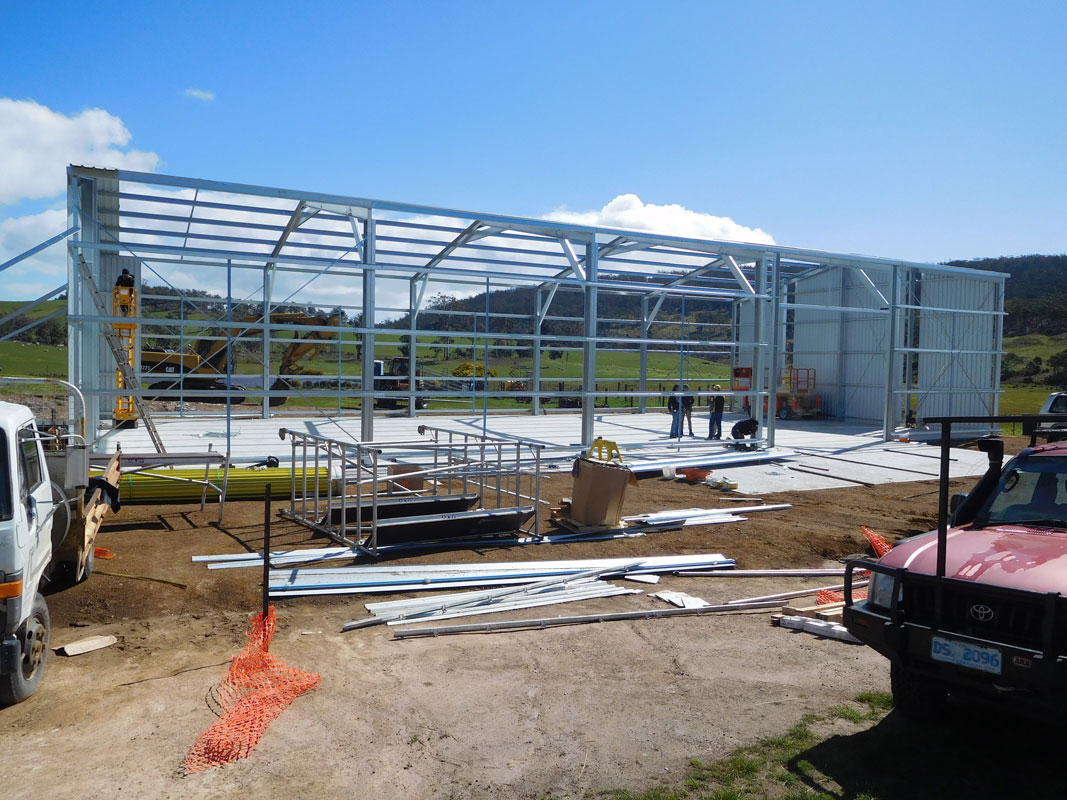
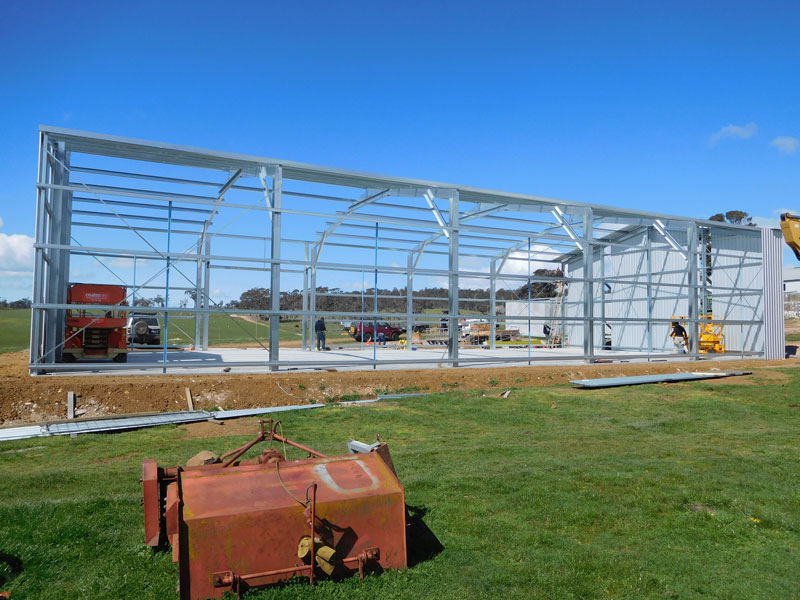
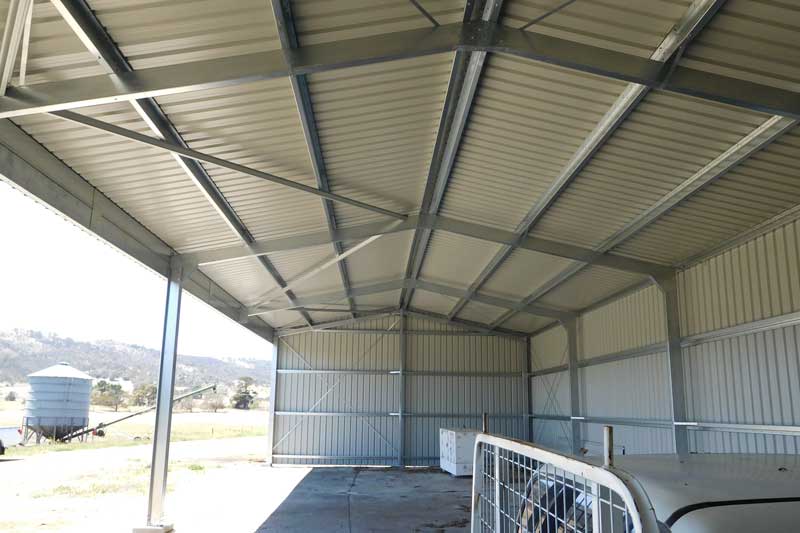
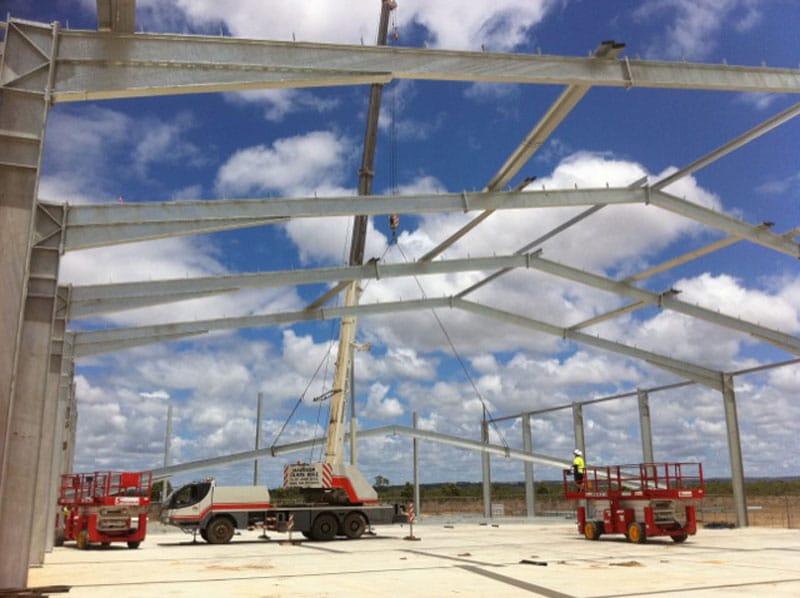
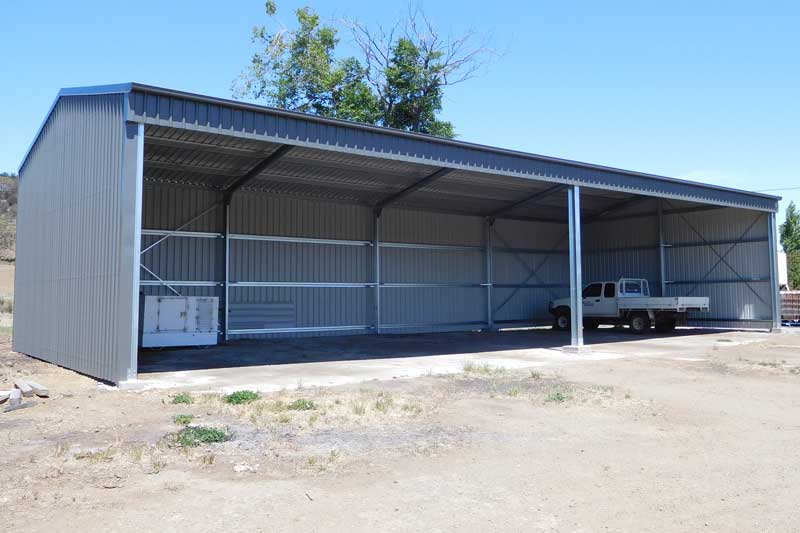
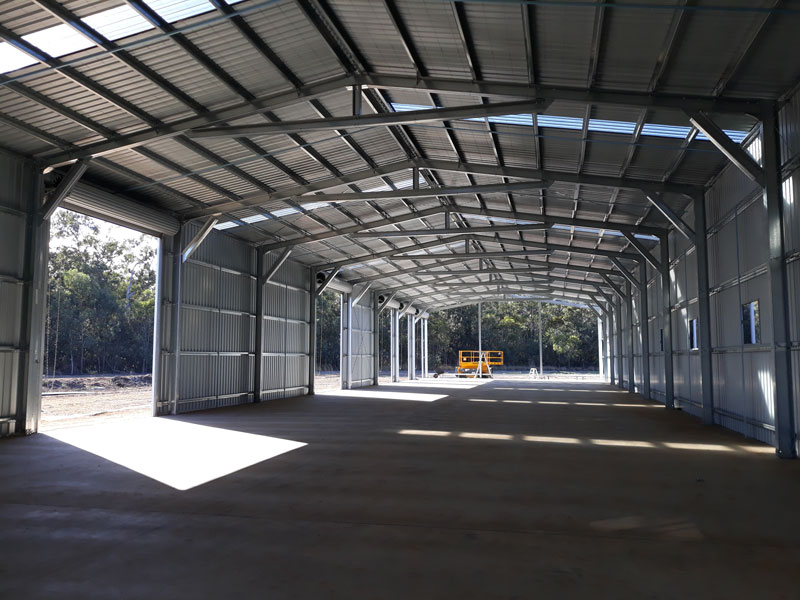
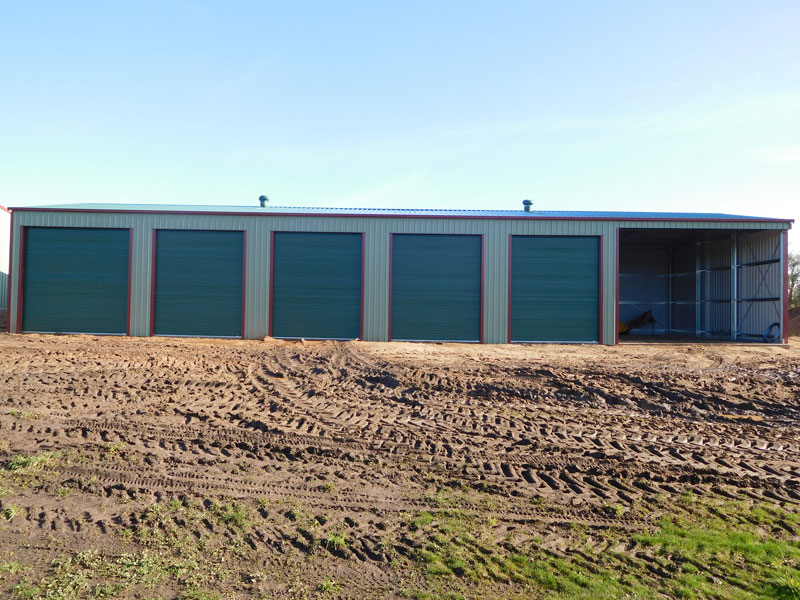
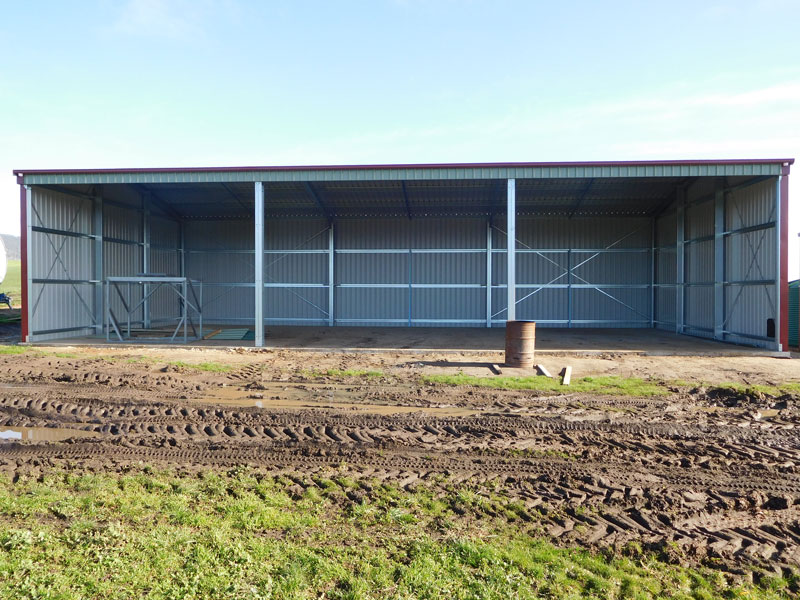
Built for the way Tasmanian farms actually work.
Open-front, enclosed and combination layouts
Most farm sheds fall into three broad layouts, and you can mix them in one building:
- Open-front sheds give clear, drive-in access to each bay, ideal for hay, storage bins, tractors, implements and general cover. Dividing walls can be added between bays to separate storage areas.
- Fully enclosed sheds suit grain, fertiliser, chemical storage and anything needing full protection from the weather, and are often finished with large steel roller doors. Ventilation, windows, insulation and skylight sheeting can be integrated.
- Combination sheds keep some bays open for quick access while locking up others for machinery or to keep valuable tools and vehicles safe.
Mezzanine flooring can be added to lift stock off the ground and make use of the height, and lean-tos along one or both sides give you extra covered space for implements, firewood or stock shelter at a lower cost than extending the main span.
Popular uses for farm sheds
- Dairy Covers
- Cattle Yard Covers
- Produce Bin Storage
- Wine Storage
Engineered for Tasmanian rural conditions
Rural blocks are often the most exposed sites in the state, open paddocks with no windbreak, elevated country, or land near the coast. Most of Tasmania sits in wind Region A (non-cyclonic), but an exposed rural site can attract much higher design wind speeds than a residential block, and properties in the Central Highlands and other elevated areas carry genuine snow loading that a standard frame is not built for. We engineer every farm shed to its own site for wind, snow and solar loading rather than applying a generic design, which is the substance behind our ShedSafe accreditation. For coastal grazing and cropping country we can also recommend COLORBOND® Ultra steel for extra corrosion resistance in salt exposure.
Do farm sheds need council approval in Tasmania?
Farm sheds generally do need a building permit, but the rules for genuine agricultural buildings on farmland differ from those for a suburban shed. Under the Tasmanian CBOS framework, some farm buildings built on rural land of up to 200 square metres are exempt from needing a building permit. Read the CBOS shed building cheat sheet and the guide to whether your shed needs a building permit for more information. We would always advise speaking to your local council to see if your future building falls under these exemptions.
Design your farm shed in 3D.
Pick a starter design and open it in the 3D Shed Designer: change the span, length, height and colours, then send it to us for a firm quote.
 TAS-1001
Gable Shed
9m x 6m x 3.0m
Customise This Design TAS-1002
Large Garage
12m x 7.5m x 3.6m
Customise This Design TAS-1003
American Barn
11m x 9m x 4.2m
Customise This Design TAS-1004
Workshop Shed
12m x 9m x 3.6m
Customise This Design TAS-1005
Farm Shed
18m x 12m x 4.2m
Customise This Design TAS-1006
Commercial Shed
24m x 15m x 6.0m
Customise This Design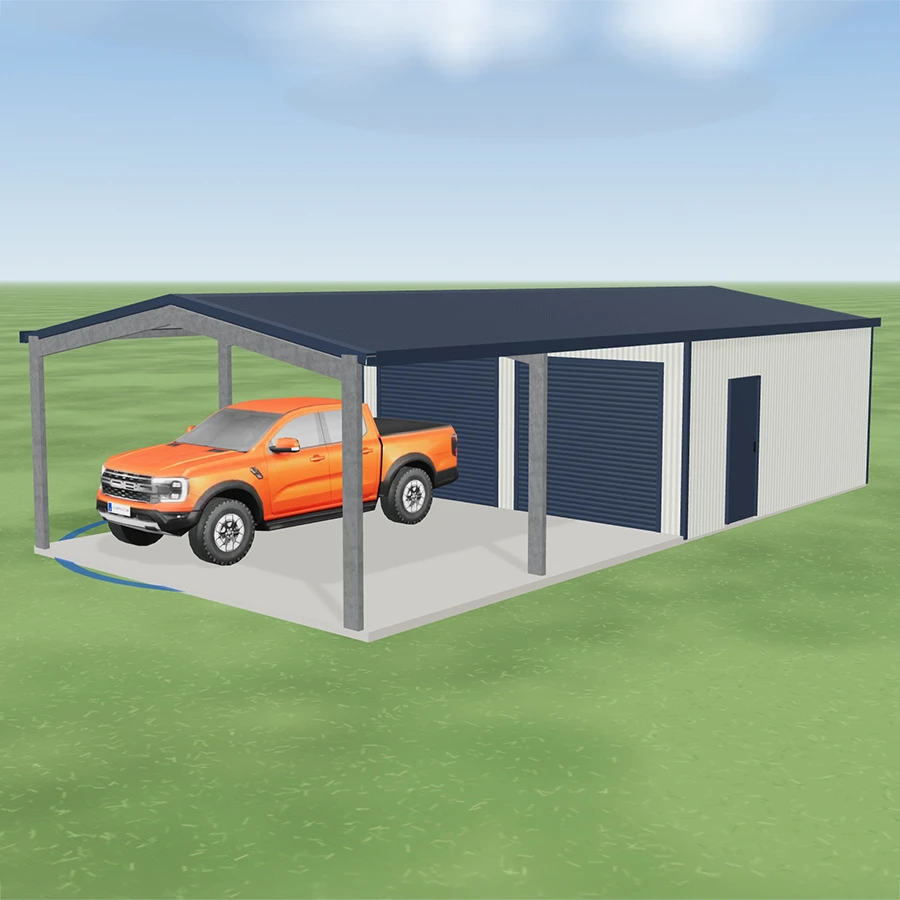 TAS-1007
Garaport
6m x 12m x 2.7m
Customise This Design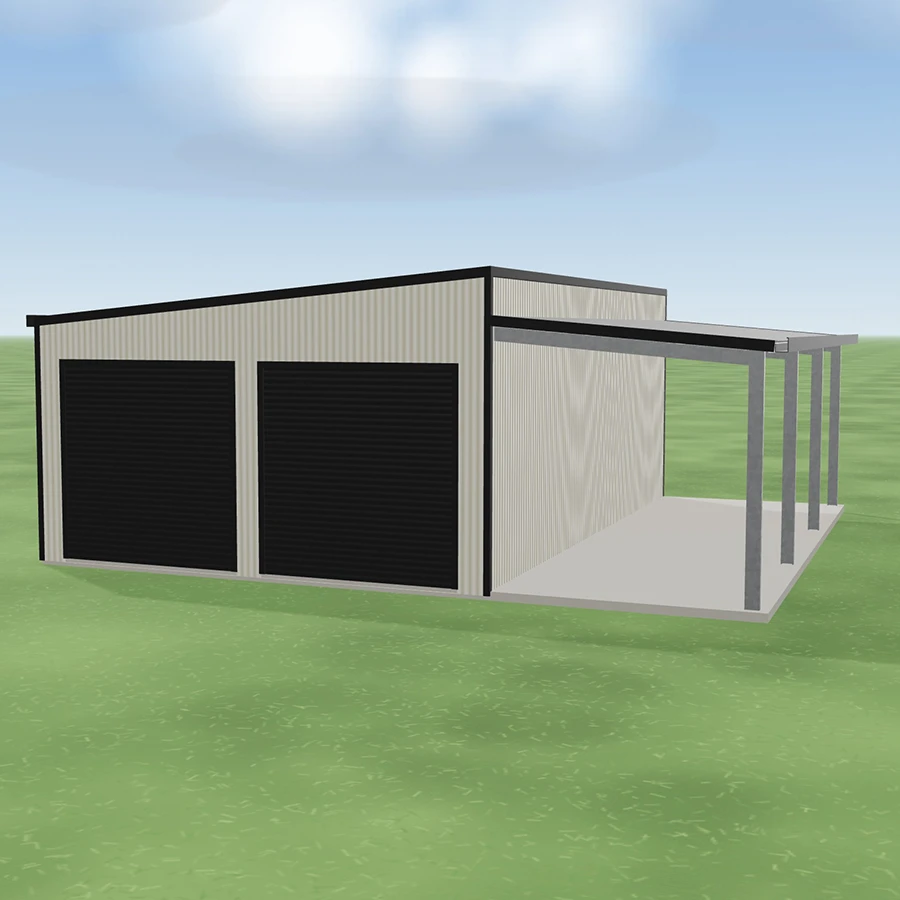 TAS-1008
Skillion Garage
9m x 9m x 3m
Customise This Design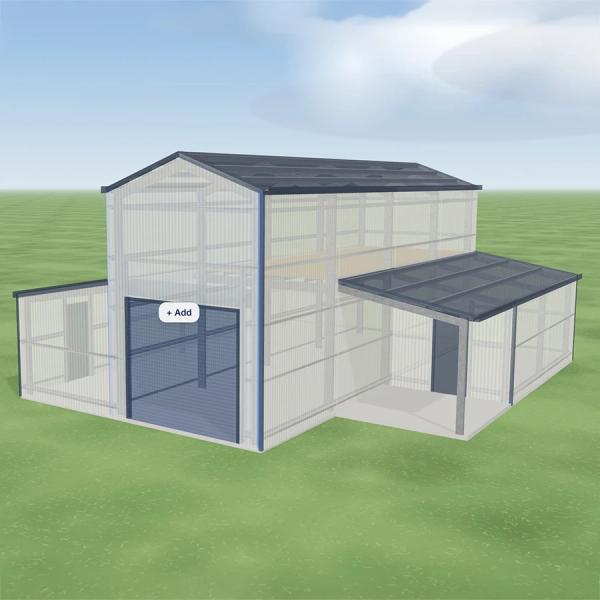 TAS-1009
Combination Barn
10m x 12.5m x 5m
Customise This Design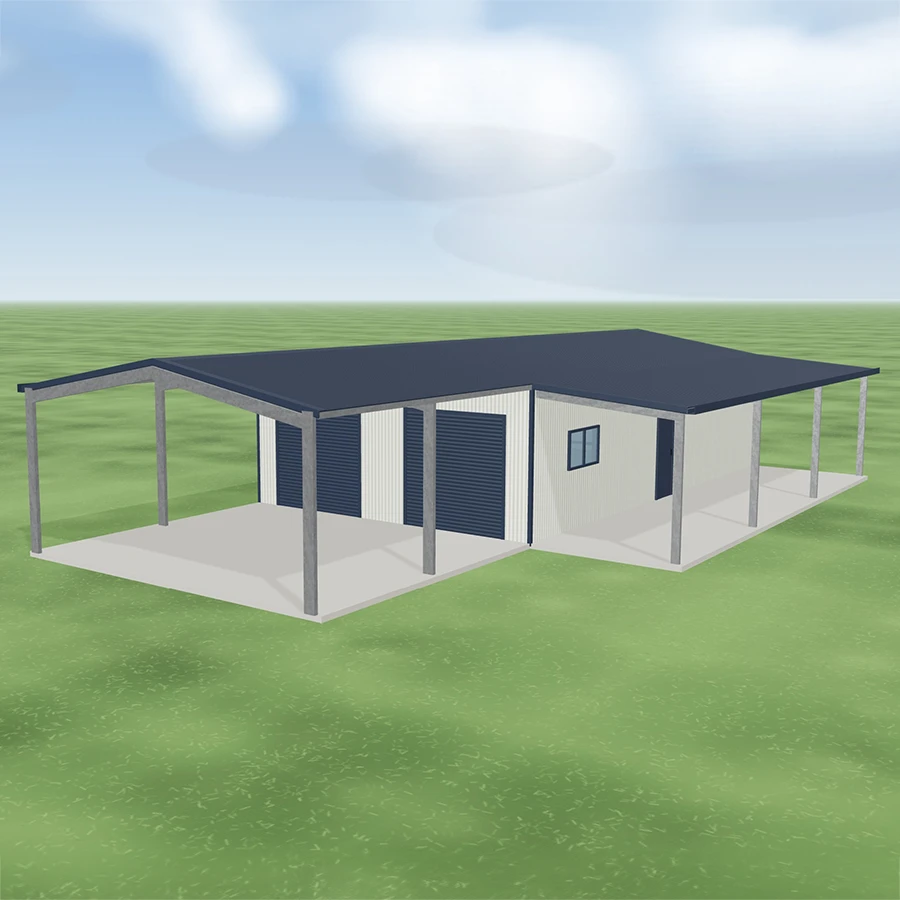 TAS-1010
Garaport & Awning
18m x 7m x 3m
Customise This DesignFarm shed questions, answered.
How much does a farm shed cost in Tasmania?
There is no fixed price because span, height, doors, cladding type and site wind rating all change the cost, though our shed prices guide has indicative ranges. Build your shed in the 3D designer and send it to us to price, or request a written quote for a figure tailored to your property.
How big can a farm shed be?
The portal-frame system handles clear spans up to 25 metres, heights up to 8 metres, bays of up to 9 metres wide, and they can be basically unlimited in length.
What is the difference between an open-front and an enclosed farm shed?
An open-front shed gives drive-in access to each bay and suits hay and machinery; an enclosed shed is sealed against the weather for grain, fertiliser or chemical storage and usually has large roller doors. Many customers combine both in one building. Another popular farm shed style is an open gable farm shed. Instead of the ends being closed, the two ends are open and the sides are enclosed. This building is also known as a breeze through shed.
Do you deliver farm sheds to rural Tasmania?
Yes. We deliver across most of Tasmania for free. The main areas we do not service are south of Smithton and Waratah, down to Strahan, and across the Central Highlands.
Can I get a farm shed as a kit, or do you install it?
Both paths are available. You can take an engineered BlueScope steel kit to erect yourself, or we can recommend experienced installers and concreters from across Tasmania who can do the build for you.
How long does a farm shed take to build?
Most buildings are delivered within 4 to 6 weeks of ordering, depending on the size, the design and the current schedule.
Tell us the paddock.
We'll quote the steel.
One form, one designer, one written quote. No pushy sales calls, just the numbers you need to compare with confidence. Made Tassie Tough.